
Proactive Asset Management for Councils: Moving Beyond Reactive Maintenance
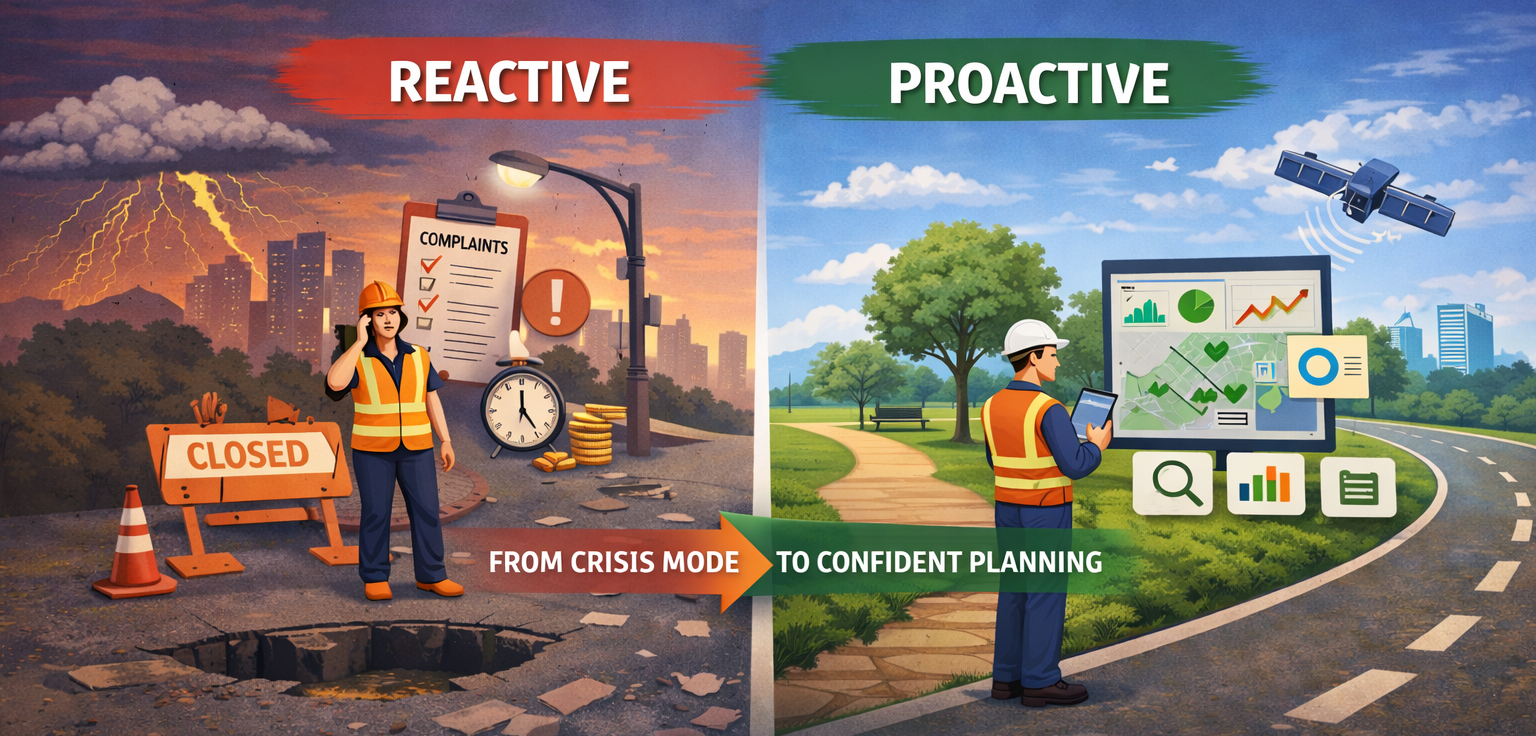
For many Australian councils, asset maintenance still follows a familiar pattern. An asset fails, a complaint is logged, crews are redirected, and planned work is pushed back. The costs are well understood, yet breaking away from reactive maintenance remains difficult. Proactive asset management for councils focuses on using consistent condition data, planned maintenance and connected systems to reduce risk, improve efficiency and make better long-term decisions.
The issue is not intent. Most councils want to be more preventative and data-driven. The challenge is execution. Fragmented systems, inconsistent condition data, and limited network-wide visibility make it hard to act early, even when risks are clear.
Over time, reactive maintenance reinforces itself. Emergency work consumes resources, teams remain stretched, and long-term planning suffers. The result is higher whole-of-life costs, increased service risk, and reduced confidence in asset decisions.
Rising operational pressures, including fuel costs, are making proactive approaches even more important.
The real cost of staying reactive
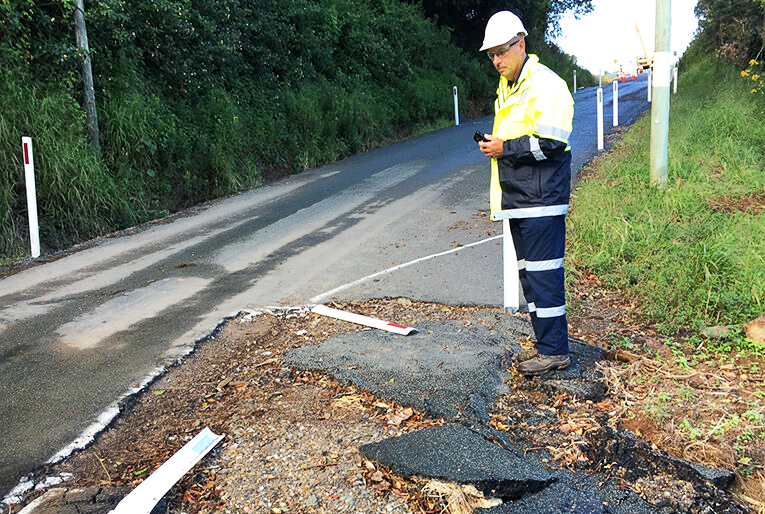
Reactive maintenance will always have a place, but when it becomes the default, costs escalate quickly. Emergency works attract higher labour and equipment expenses, often delivered after damage has already occurred. Asset life is shortened, service disruptions increase, and community complaints rise.
Less visible, but equally damaging, is the impact on planning and governance. When unplanned work dominates, maintenance programs become unstable and difficult to justify. Budgets fluctuate, capital works are deferred, and it becomes harder to demonstrate that decisions are consistent, evidence-based, and aligned to risk.
Industry research consistently shows that councils adopting proactive and preventative maintenance can reduce long-term costs by 30 to 40 per cent. Achieving this shift requires more than policy intent. It requires trusted data and the ability to act at the right time.
What proactive maintenance actually looks like

Proactive, or smart, maintenance is often discussed in theory. In practice, it is precise and operational.
It relies on clear visibility of asset condition, understanding how assets deteriorate over time, and intervening before failure occurs. Maintenance is guided by defined condition thresholds, usage patterns, and risk profiles, not complaints or crises.
Inspection data flows directly into planning systems. Field data is captured once and reused across maintenance, investigations, funding claims, and capital planning. Most importantly, the loop between field and office is closed. Crews understand priorities, asset managers trust the data, and leadership gains early visibility of emerging risk.
Why councils struggle to make the shift
Despite broad agreement on the benefits, many councils remain stuck in reactive cycles. The barrier is often fragmentation rather than technology alone.
Condition data is frequently incomplete or inconsistent, collected through paper inspections, spreadsheets, or disconnected systems. GIS, finance, CRM, and asset registers operate in silos, making it difficult to build a reliable picture of asset health. Manual workflows slow response times and increase duplication, while time-poor teams default to firefighting.
There is also a cultural challenge. Where systems have failed before, teams can be cautious about automation or data-driven triggers. Without confidence in the underlying data, proactive maintenance feels risky rather than enabling.

Building confidence through connected data

Councils that successfully move toward proactive maintenance usually start with data quality and visibility, not automation for its own sake. Standardised inspections, consistent condition capture, and direct links between field data and asset systems create the foundation for better decisions.
Modern, mobile-first asset platforms have made this far more achievable. Real-time condition updates allow issues to be identified early. Historical condition tracking reveals whether assets are deteriorating gradually or failing faster than expected. Over time, this builds trust in the data and reduces reliance on reactive responses.
At Moyne Shire Council, replacing spreadsheets and fragmented tools with a single, connected platform delivered immediate results. Within months, unplanned maintenance fell by around 40 per cent as condition-based triggers replaced ad-hoc responses. Staff reported less duplication, clearer priorities, and greater confidence in daily decision-making. Similar outcomes are emerging elsewhere. Regional councils are identifying road deterioration hotspots earlier, reducing emergency works after severe weather. Metropolitan councils are linking maintenance history to capital planning, improving confidence in forward works programs. Councils responding to natural disasters are capturing damage data in real time, strengthening the speed and defensibility of DRFA claims.
See how this approach works in practice
How councils can transition to proactive asset management
While every council operates in a different context, those making progress tend to follow a similar approach.
They establish a clear baseline, ensuring asset registers are accurate and condition data is captured consistently across priority networks. Practical condition thresholds are set with operational teams, focused on what is achievable and defensible.
Automation is introduced gradually to support standard responses, not replace professional judgement. Field teams are equipped with mobile tools that simplify data capture. Tools like AI-powered inspections with AutoPilot help councils maintain consistent data collection across their network. Dashboards are then used to track trends, measure reductions in unplanned work, and report outcomes to leadership and the community. This relies on turning asset data into clear decisions across the organisation.
Crucially, successful councils embed these practices into everyday operations. Proactive maintenance becomes how decisions are made, not an additional process layered on top.

Why proactive asset management improves decision-making

Australian councils manage extensive and complex infrastructure networks. How these assets are maintained directly affects safety, service delivery, and long-term financial sustainability.
Moving from reactive to proactive maintenance is no longer aspirational. With consistent data, connected systems, and practical workflows, councils can move out of firefighting mode and make confident, defensible asset decisions.
Why reactive maintenance is no longer sustainable
Reactive maintenance leads to higher costs, inconsistent service levels and reduced confidence in asset planning. As infrastructure networks age and budgets tighten, councils cannot afford to rely on reactive approaches.
Moving to proactive asset management is now essential for maintaining service levels and managing long-term financial sustainability.

Making proactive asset management practical for councils
For councils looking to reduce unplanned work and improve confidence in maintenance prioritisation, the fastest gains come from connecting field data to planning workflows and making condition information consistent across the network. Asset Vision supports councils to do exactly that, helping turn proactive maintenance into a practical, achievable reality.
Take the next step toward proactive asset management. Asset Vision helps councils move from reactive maintenance to proactive, data-led decision-making with one connected platform. See here.
Book a demo today: www.assetvision.com.au/contact

Frequently asked questions
What is proactive asset management for councils?
Proactive asset management involves maintaining infrastructure based on condition data and planned interventions, rather than reacting to failures.
Why do councils struggle to move away from reactive maintenance?
Many councils rely on fragmented systems, inconsistent data and limited visibility, making it difficult to plan effectively.
What are the benefits of proactive asset management?
It reduces unplanned work, improves decision-making and helps councils manage budgets more effectively.