
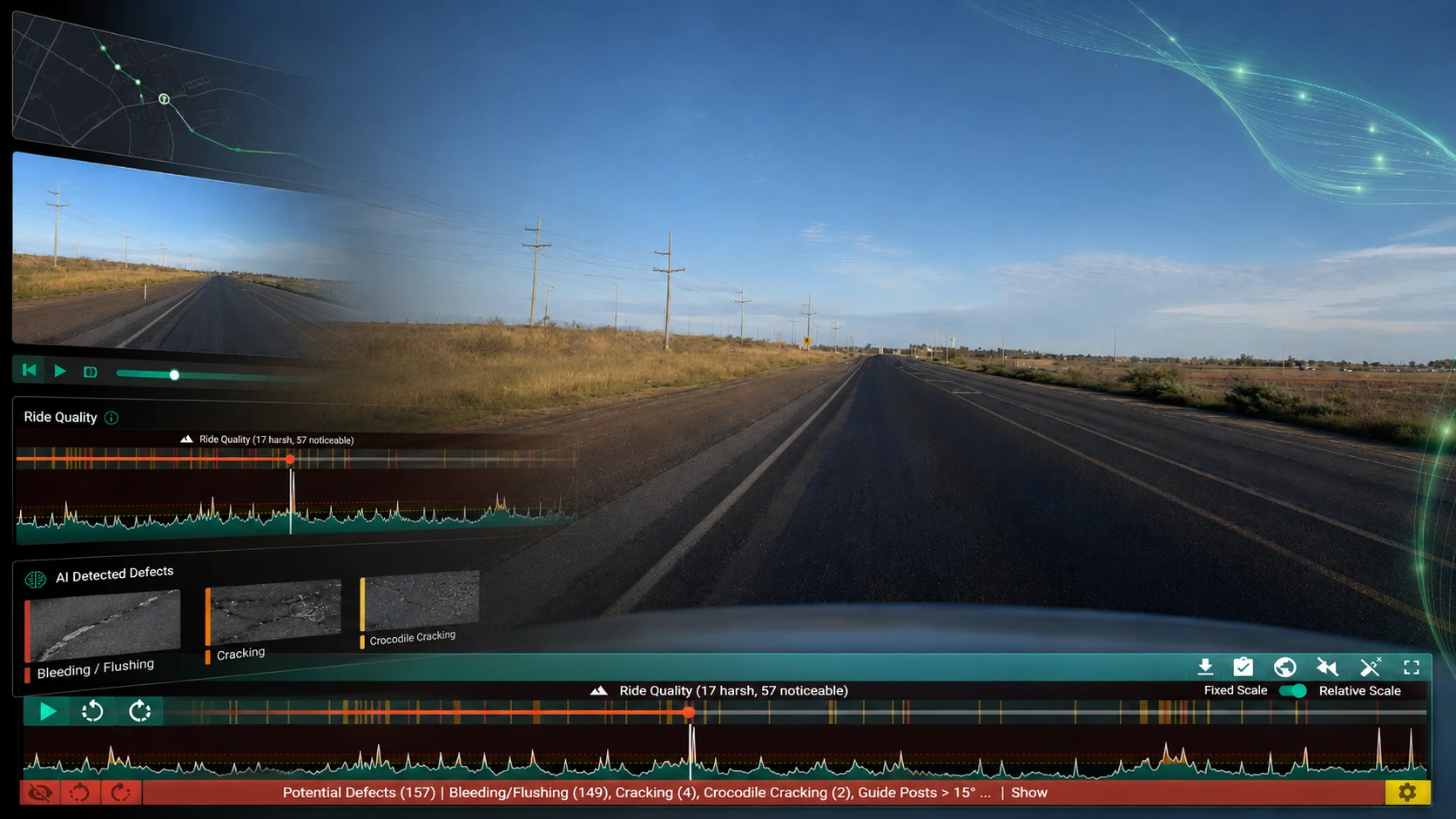
AutoPilot Update adds Ride Quality insights and expanded AI Defect Detection
Asset Vision has released a new AutoPilot update, introducing ride quality insights, expanded AI defect detection and improvements to existing defect models.
The latest release strengthens AutoPilot’s role in helping councils, road managers and infrastructure teams capture better field evidence, review road condition more efficiently and move from inspection to action with greater confidence.
Ride quality insights now available
AutoPilot inspections can now include ride quality data captured through the iPhone’s accelerometer during road inspections.
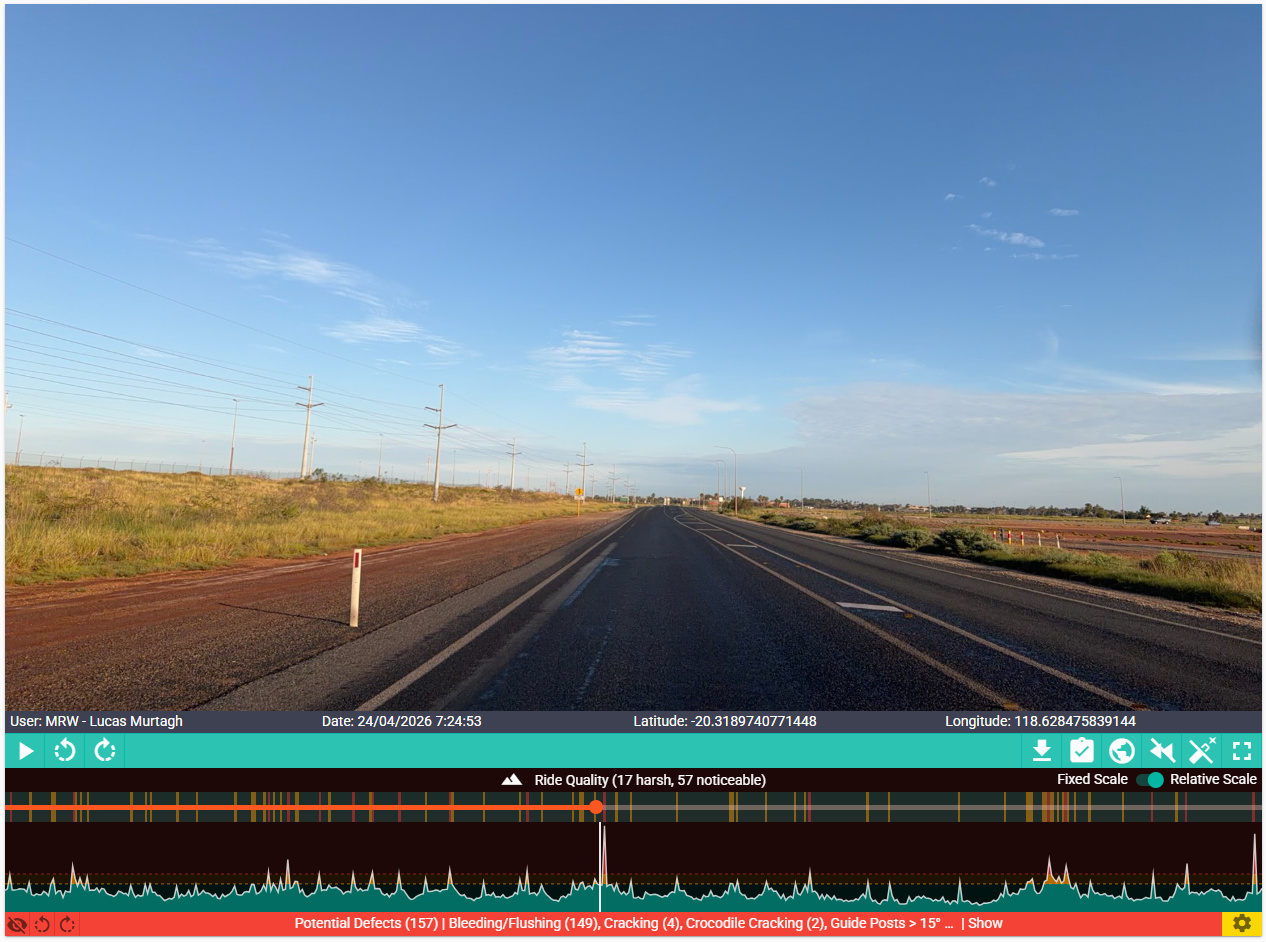
This capability helps teams visualise where a road feels smooth or uneven during inspection playback. When ride quality data has been captured, users can see a dedicated ride quality area under the AutoPilot playback viewer. Indicators along the playback timeline highlight where ride quality may be impacted, making it easier to jump to areas that may require closer review.
This gives office-based teams another layer of evidence when assessing road condition. Rather than relying only on visual imagery, teams can now review how the road was experienced during the inspection drive and compare that information with captured imagery, location data and potential defects.
The update also introduces a toggle between fixed and relative scale views. The fixed scale is designed to help teams compare ride quality against general smoothness thresholds. The relative scale focuses on the average ride quality for that specific inspection, helping users identify outliers within the captured route.
Together, these views give teams more flexibility when reviewing road condition. They can assess whether sections of road are performing poorly against broader expectations, or focus on the worst areas within a particular inspection run.
New AI defect detections are coming
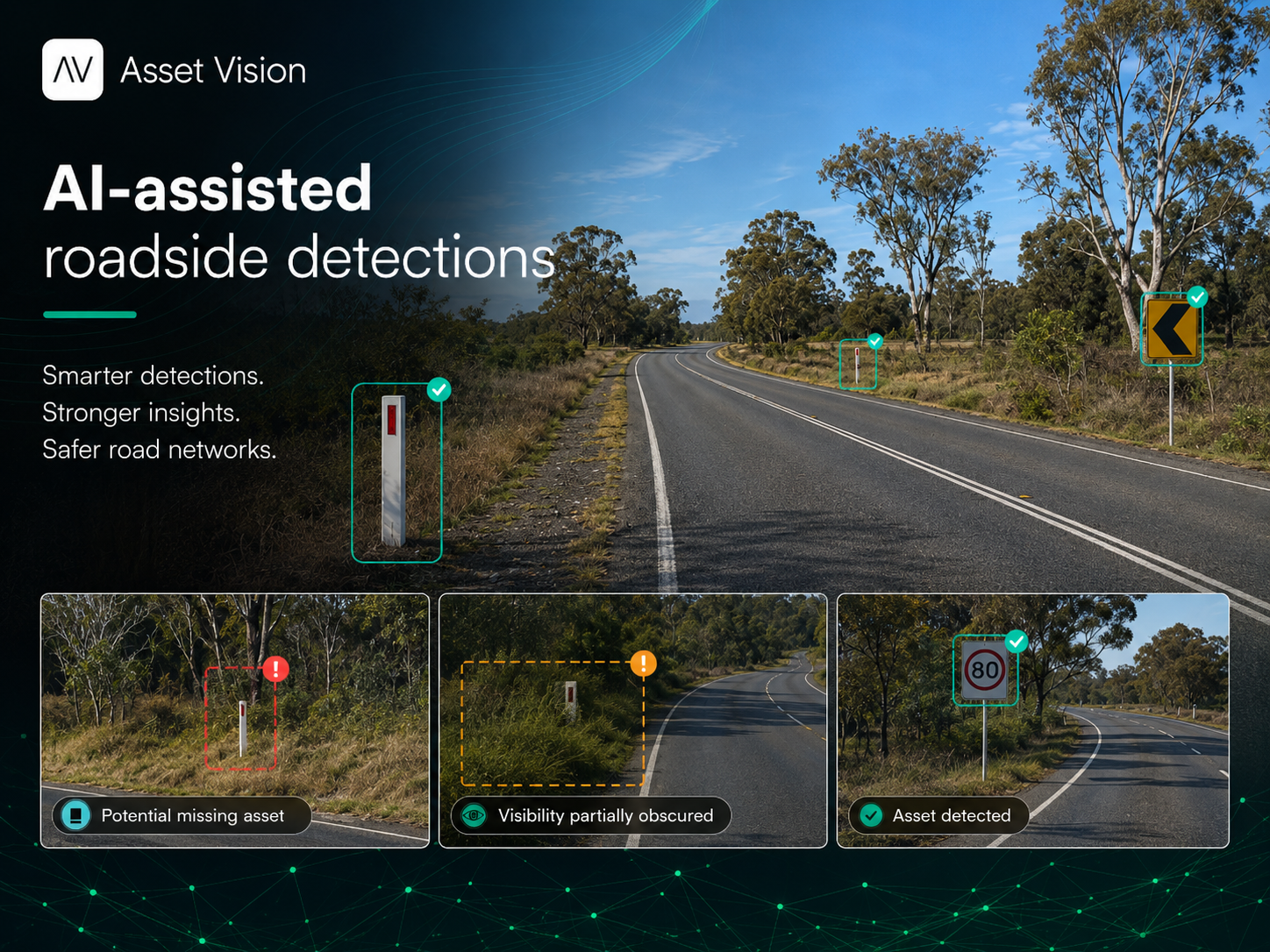
The update also prepares AutoPilot for a new set of AI-assisted detections, including:
- Missing guideposts
- Missing signs
- Signs obscured by vegetation
- Guideposts obscured by vegetation
The missing sign and guidepost detections work by referencing previously detected assets. If a sign or guidepost was previously observed in a location but is no longer detected in the same area, AutoPilot can flag it for review as potentially missing.
This is an important step forward for teams managing road corridors, safety assets and roadside infrastructure. It can help identify issues that are easy to miss during routine inspections, especially across large networks.
Improved existing AI detection models
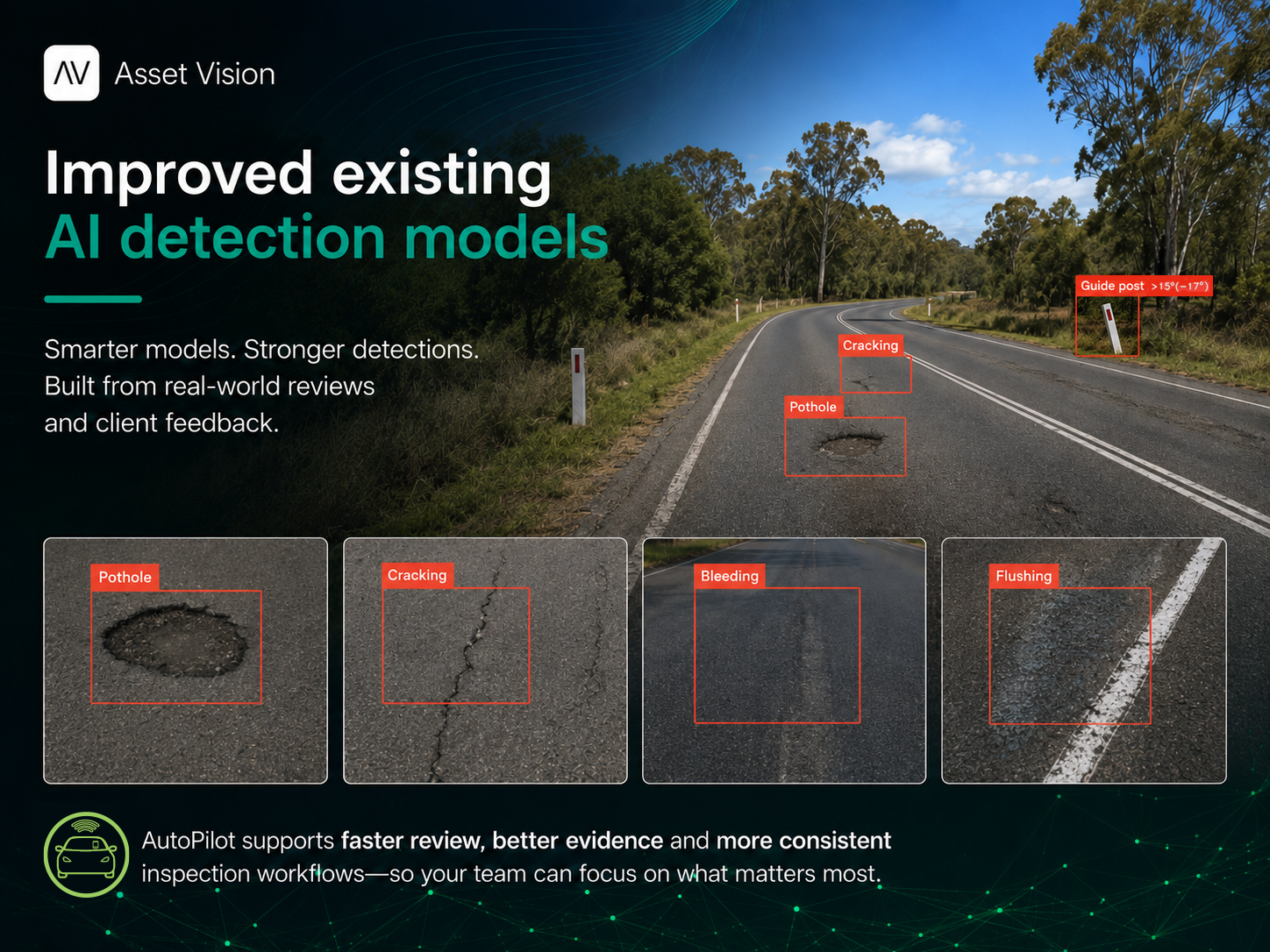
Asset Vision’s AI team has also improved existing defect detection models, including detections for potholes, cracking, bleeding and flushing.
These improvements have been informed by manual reviews and client feedback, helping refine how AutoPilot identifies and reports potential defects in real-world road environments.
As with all AI-assisted detections, the purpose is to support faster review, better evidence and more consistent inspection workflows. Teams remain in control of assessment and decision-making, with AutoPilot helping surface areas that may need closer attention.
Helping teams move from capture to action

AutoPilot continues to evolve as a practical tool for modern infrastructure teams.
The new and improved AI models will be deployed progressively during May 2026
Once deployed, new AutoPilot inspections will be analysed automatically, helping teams access the latest detection improvements as part of their normal inspection workflow.
By combining image-based inspections, geospatial playback, ride quality insights and AI-assisted detection, AutoPilot helps teams build a stronger evidence base for road maintenance, renewal planning and operational decision-making.
The latest update gives users more ways to understand what is happening across their network, where issues may be emerging and where further review may be needed.
From field capture to office decisions, automatically.
To learn more about AutoPilot, visit:
https://www.assetvision.com.au/asset-vision-autopilot/
Frequently asked questions
What is AutoPilot Ride Quality?
AutoPilot Ride Quality uses accelerometer readings captured during an AutoPilot inspection to help teams understand where a road feels smooth, uneven or bumpy during playback.
How does Ride Quality help road inspections?
Ride Quality gives teams another layer of evidence when reviewing road condition. It helps users identify sections of road that may need closer review, then jump directly to those locations in the AutoPilot playback.
Where does Ride Quality appear in AutoPilot?
When ride quality data has been captured, users will see a dedicated ride quality area beneath the AutoPilot playback viewer, with timeline indicators showing where ride quality may be impacted.
What is the difference between fixed and relative scale?
Fixed scale helps compare ride quality against general smoothness thresholds. Relative scale focuses on the average ride quality for the specific inspection, helping teams identify outliers within that inspection run.
What new AI-assisted detections are being added?
The update prepares AutoPilot for new AI-assisted detections, including missing guideposts, missing signs, signs obscured by vegetation and guideposts obscured by vegetation.