
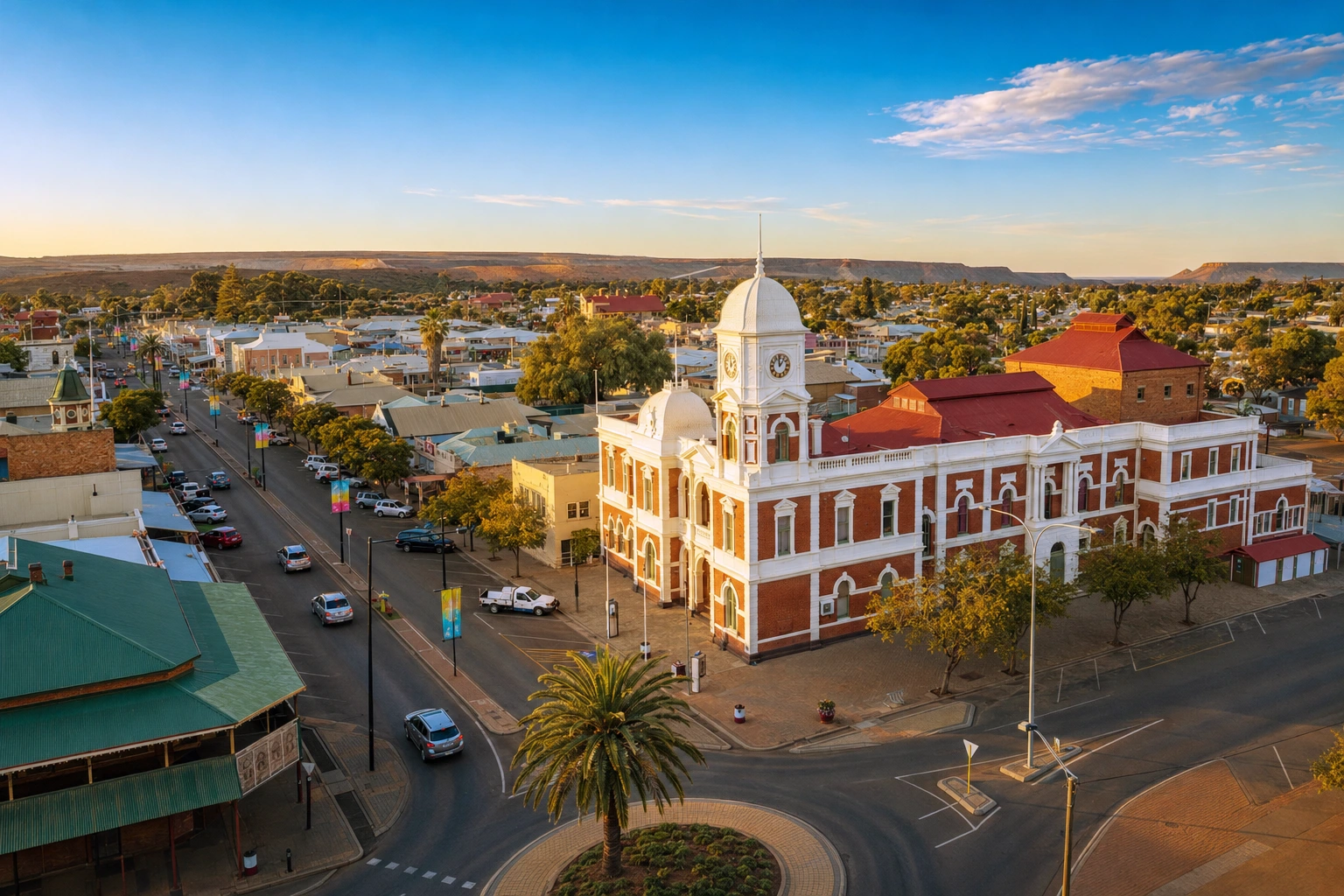
Kalgoorlie-Boulder is building a connected approach to managing assets, inspections, capital works and long-term planning
A Stronger Foundation for Regional Asset Management
The City of Kalgoorlie-Boulder is one of Western Australia’s most significant regional centres, managing a large and diverse asset portfolio that supports community life, regional connectivity, economic activity and long-term service delivery.
As the amalgamation of two historic cities, Kalgoorlie-Boulder is responsible for a broad mix of assets, including historic precincts, civic buildings, sealed and unsealed roads, open spaces, water and waste services, and community infrastructure.
This includes around 500 kilometres of sealed roads and approximately 1,500 kilometres of unsealed roads, with some routes connecting settlements across long distances. In a regional environment where services, contractors and materials often need to travel significant distances from Perth, effective asset management is central to financial sustainability, operational efficiency and community outcomes.
A Proactive Asset Management Improvement Program
In 2024, the City commenced an Asset Management Improvement Project to review its asset management framework, asset management system, policies and procedures.
The review identified an opportunity to take a fresh approach to system structure, data, workflows and long-term planning. Rather than continuing to adapt a legacy setup that had grown over time, the City moved toward a more structured asset management environment that could better support operations, compliance, financial planning and future improvement.
This reflects a broader asset management maturity journey, focused not only on replacing a system, but on strengthening how assets are recorded, inspected, maintained, renewed and planned over time.
Implementing Asset Vision as the Core EAM
Asset Vision is being implemented as the core of the City’s new Asset Management System, with an initial focus on four asset classes:
- Transport
- Property
- Open Spaces
- Water and Waste Services
These asset classes are being supported by configured workflows, inspections, compliance testing and reporting processes. Plant and Equipment, and Furniture and Equipment, are planned for a future stage. The City’s asset structure is being developed across asset classes, asset groups, assets and components. More than 71,000 assets have already been imported and verified, creating a stronger
Supporting Multiple Views of the Asset Portfolio
The implementation supports different asset hierarchies and reporting views.
While a finance asset register is essential for accounting and reporting, operational asset management requires a more detailed view of assets, components, locations and activities.
Asset Vision enables the City to mirror financial asset structures where required, while also supporting operational views for inspections, maintenance, performance, compliance and renewal planning.
For example, a complex site such as an airport can be viewed as one operational location, while its buildings, roads, footpaths, car parks, lighting and drainage can also sit within their relevant asset class programs.
Connecting Workflows Across Council Teams
The implementation is also supporting workflows beyond traditional asset management.
Health Services and Leasing teams are using configured asset classes, inspection templates and reporting processes to support compliance-related inspections and follow-up actions.
This includes facilities and locations such as commercial kitchens, public pools, hotels, commercial leases and private leases. Inspection templates and workflows are being configured to support defect notices, infringement notices, tenancy inspections and related compliance processes.
This creates a broader whole-of-council opportunity. Asset Vision is not only supporting roads, buildings, open spaces and utilities. It is also helping create structured, auditable workflows for teams that need consistent inspections, evidence capture and reporting.
A Practical Approach to Implementation
The implementation has focused on practical adoption across the organisation.
Existing workflows from field and depot teams are being recreated digitally, helping staff move from paper forms, spreadsheets and manual coordination into structured digital workflows without unnecessary disruption.
This is important for change management. When systems require teams to completely change the way they work, adoption can become difficult. By configuring forms and workflows around familiar processes, the implementation supports a smoother transition.
Team champions have also been involved in testing and shaping workflows before broader rollout. This helps ensure the system reflects real operational needs before being adopted more widely across teams.
Integrating Planning, Reporting and Community Requests
Asset Vision is being implemented alongside Modelve and Snap Send Solve to support a more connected asset management environment.
Modelve is being used for financial modelling, predictions and asset management planning, particularly across the City’s large property portfolio.
Snap Send Solve is being integrated to help community-reported issues connect into operational workflows.
For road assets, AutoPilot and CoPilot provide additional capability for condition assessments and field evidence capture, helping teams collect consistent data and link observations back to asset records.
Supporting Capital Works Planning and Delivery
Asset Vision is also being used to support capital works planning and delivery across the City’s roads asset portfolio.
With contractors delivering works across the road network, the platform helps connect planned works, delivery activity, asset information, hold points, forms management and reporting in one environment.
This provides clearer visibility of what is planned, what is underway and what has been completed across road-related capital works.
Improving Visibility and Decision-Making
As Asset Vision becomes embedded, the City will gain greater visibility of asset condition, inspections, maintenance activity, open jobs and completed works.
Dashboards and reporting can provide clearer information to asset managers, supervisors and leadership, reducing the need for manual follow-up and improving transparency across teams.
By linking work activity directly to assets, the City can build a stronger evidence base for decisions about maintenance, renewal, resourcing and service delivery.
Over time, this data can also strengthen long-term planning. As more condition and performance information is collected, the City will be better positioned to understand asset deterioration, forecast future renewal needs and refine long-term financial planning.
Looking Ahead
The City of Kalgoorlie-Boulder’s implementation of Asset Vision is part of a broader asset management improvement journey.
The initial rollout is focused on key asset classes and operational workflows, with further asset classes and asset groups planned for future stages.
For regional councils managing large and diverse portfolios, the project demonstrates the value of a flexible, configurable and practical asset management platform.
By connecting assets, inspections, workflows, capital works, reporting and long-term planning, Asset Vision supports a more visible, consistent and sustainable approach to infrastructure management.