
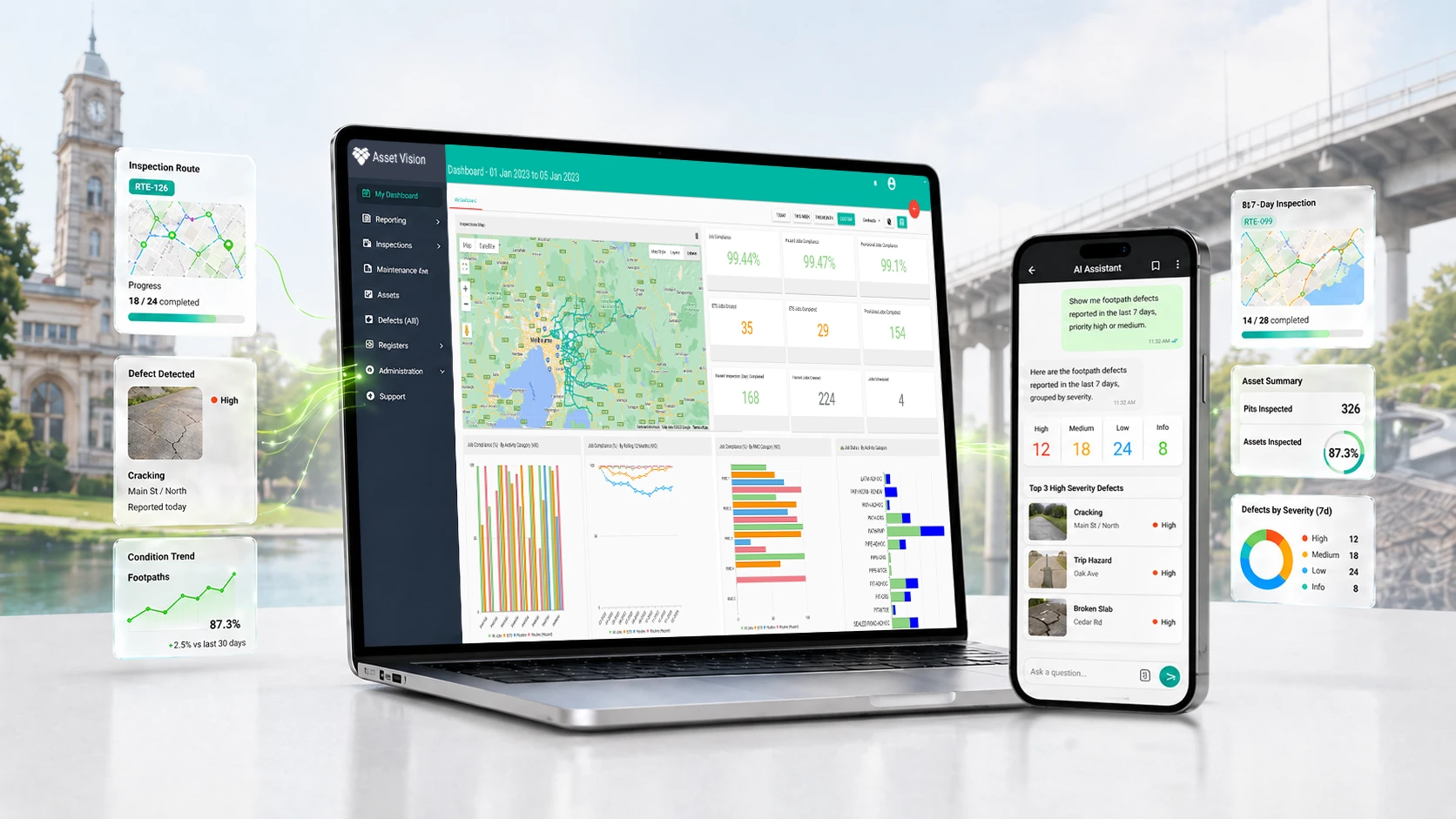
AI is changing how infrastructure teams access asset data
For many councils and infrastructure operators, the challenge is no longer a lack of data.
It is how quickly teams can find it, understand it and use it.
Inspections, defects, jobs, images, locations, asset histories and condition records are often captured across multiple systems, reports and workflows. The information may exist, but getting to the right answer still takes time.
That is where AI-assisted access to asset management data can make a practical difference.
Asset Vision is now connected to ChatGPT and Claude, giving authorised users a new way to interact with the information already inside the platform. Instead of relying only on dashboards, exports or manual report building, teams can ask natural language questions and receive faster, more contextual answers.
This is not about replacing asset managers, engineers, inspectors or works teams. It is about helping them get to the information they need more easily.
From static reports to active questions
Traditional reporting is still important. Dashboards, scheduled reports and structured data exports all have a place in asset management. But they often answer questions that have already been defined.
Operational teams frequently need to explore live or emerging questions, such as:
- Which jobs need urgent attention today?
- Where are recurring defects appearing?
- Which inspections are overdue?
- Are there patterns in certain asset classes, locations or work types?
- Which defects may need further investigation before works are planned?
With Asset Vision connected to ChatGPT and Claude, authorised users can ask these types of questions in plain language. The AI assistant can help surface relevant information, summarise patterns and connect operational context across inspections, jobs, defects and assets.
This makes it easier to move from “where is the report?” to “what do we need to understand?”
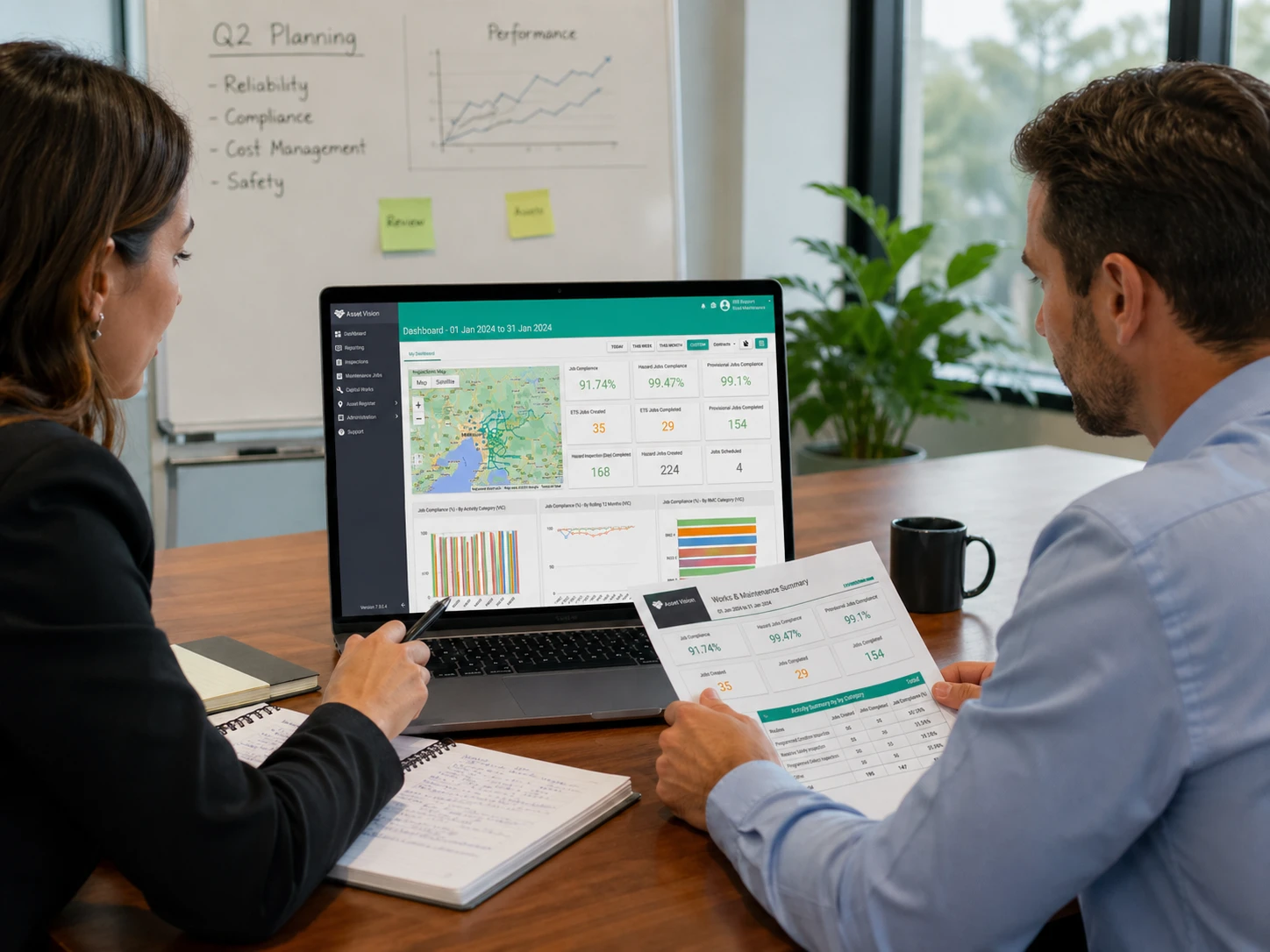
Helping teams see the bigger picture
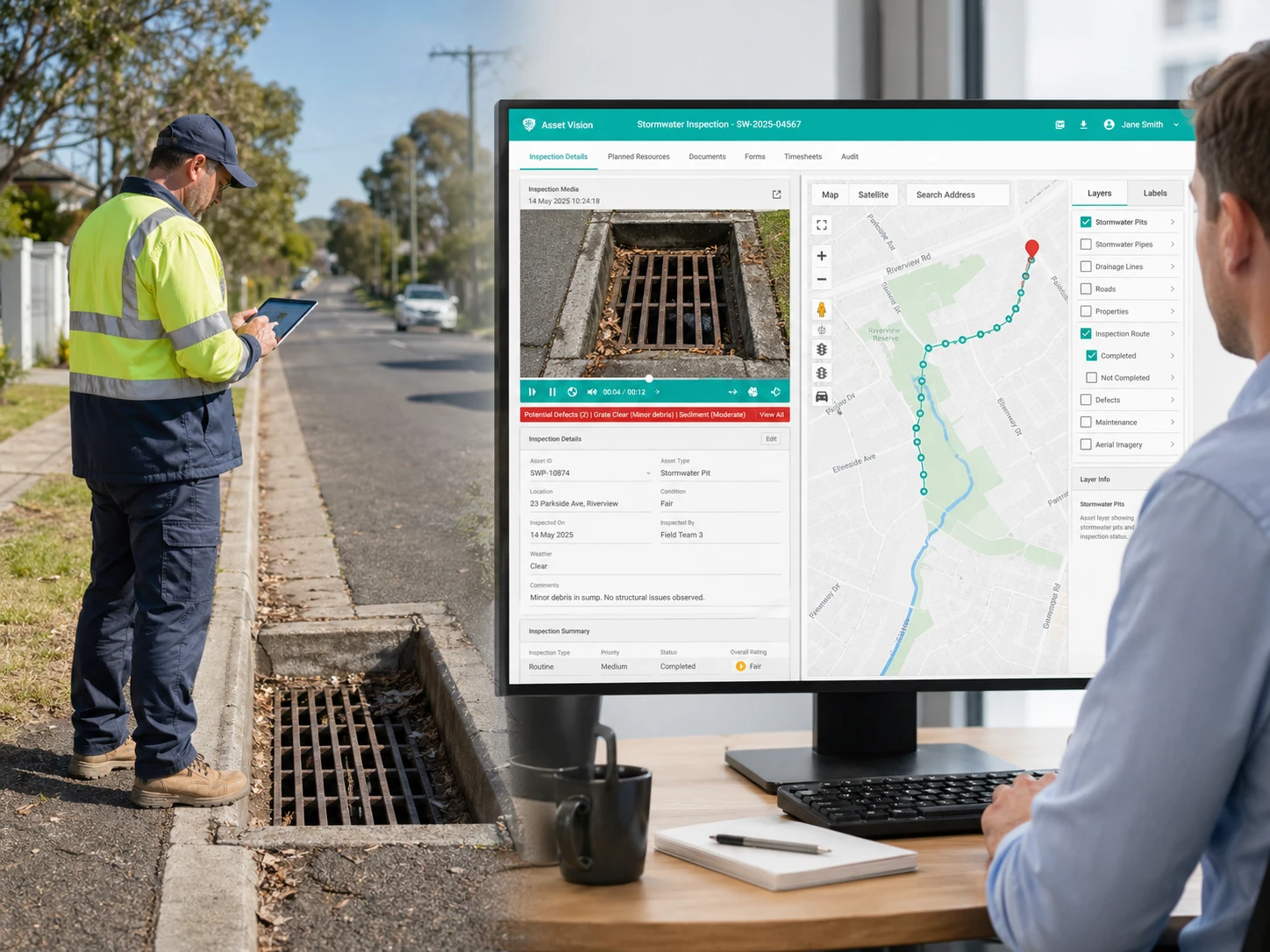
Asset management decisions are rarely made from one data point. A pothole, damaged footpath, drainage issue or facility defect may seem simple in isolation. But the decision around what to do next can depend on history, severity, location, risk, previous jobs, inspection evidence and available resources. When this information is fragmented, teams spend more time piecing together context.
AI-assisted queries can help bring that context forward faster.
For councils, this could support clearer daily operations reviews, better visibility of overdue work, faster investigation of recurring issues and more informed discussions between field and office teams.
For infrastructure operators, it can help connect inspection evidence, maintenance activity and asset condition into a clearer operational view.
The value is not simply that users can ask a question. The value is that they can ask better questions, more often, without needing to manually search across disconnected information sources.
Making asset data more accessible
One of the biggest barriers to better asset management is accessibility. Not every user needs to build reports. Not every decision-maker has time to interrogate raw data. Not every team member knows exactly where information sits in a system.
Natural language access changes that experience.
A manager can ask for a summary of high-priority open work. An asset team can explore defect trends across a network. A field supervisor can review overdue actions. A leadership team can better understand what is happening across service areas before a planning meeting.
This gives more people a practical way to engage with asset data. It also supports a broader shift in how infrastructure teams work. Data becomes less static. Information becomes easier to question. Insights become more connected to daily decisions.
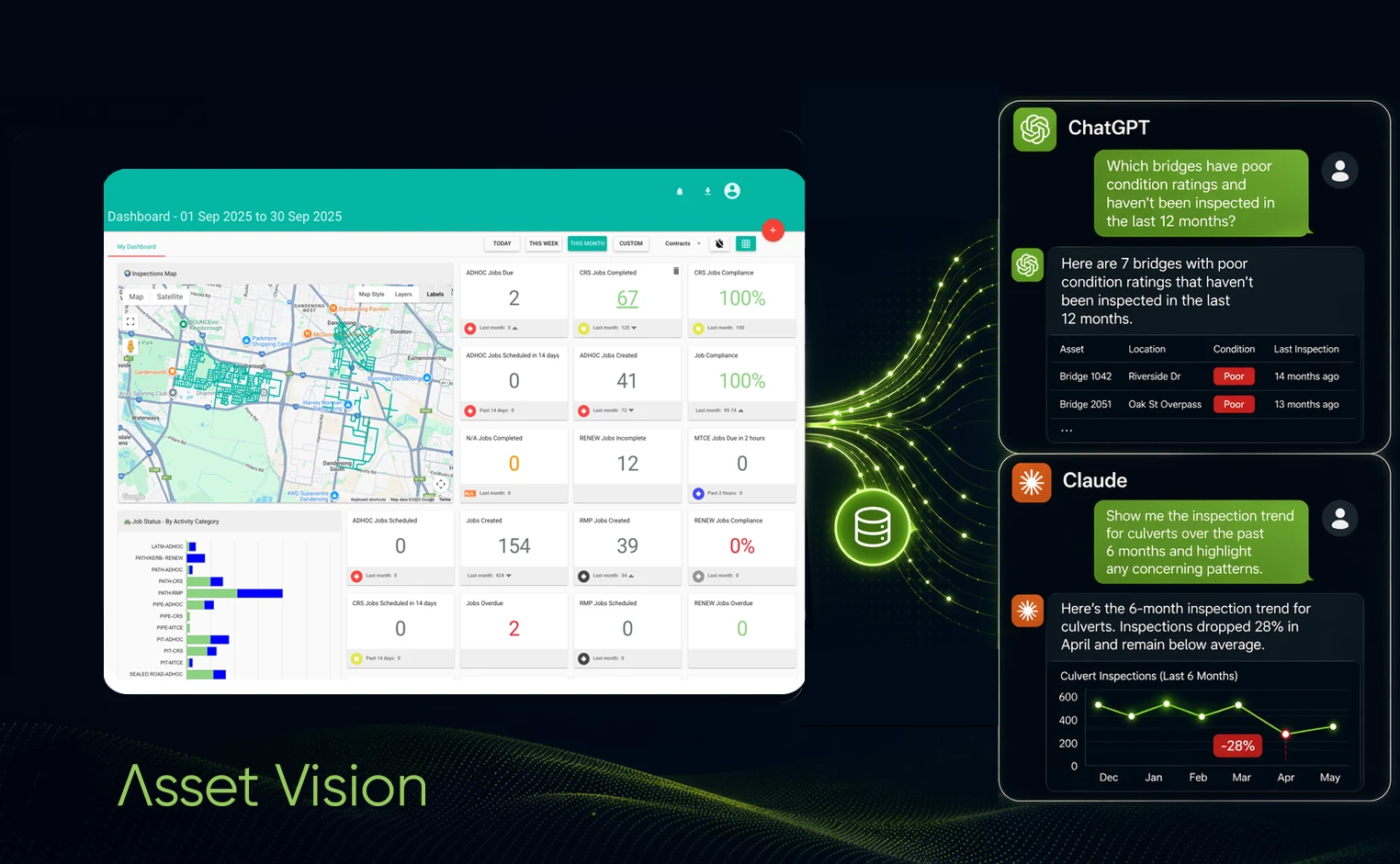
Built around real asset management workflows
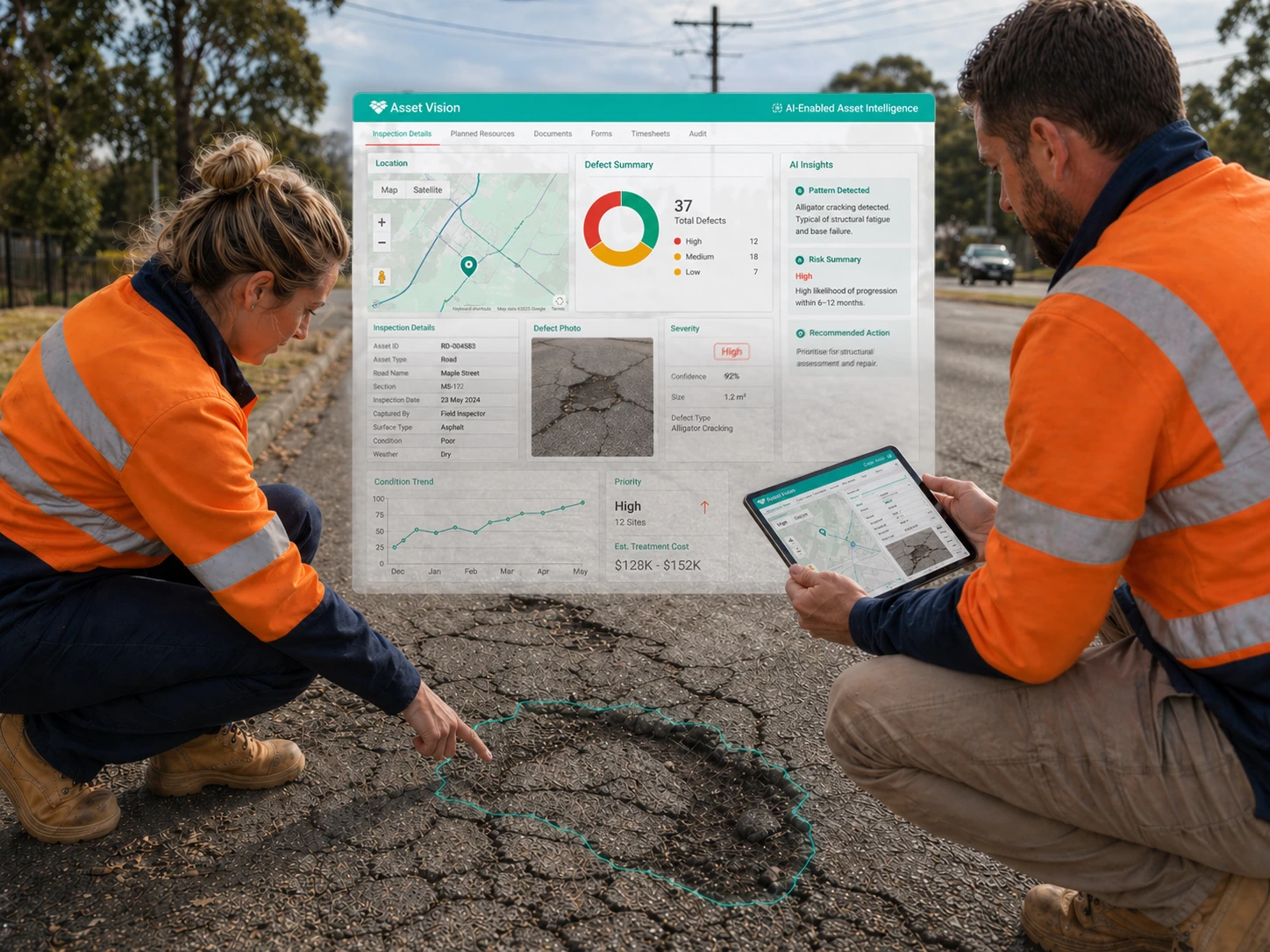
Asset Vision’s AI integration is designed to support the way infrastructure teams already work. The platform brings together field inspections, asset registers, GIS locations, images, defects, jobs and work history. By connecting this information to AI tools like ChatGPT and Claude, Asset Vision gives users a more flexible way to explore the operational data already being captured.
This is especially important for councils, utilities, transport operators and other asset-intensive organisations, where decisions often need to balance service levels, risk, safety, budgets and long-term planning.
AI can help reduce the friction between capturing information and using it. That means less time searching, filtering and compiling. More time understanding, prioritising and acting.
A practical step forward
AI in asset management should not be about novelty. It should make work easier.
It should help teams find answers faster, identify issues sooner and make better use of the information they already have.
For Asset Vision, the connection to ChatGPT and Claude is a practical step in that direction. It gives authorised users another way to access asset, inspection and operational data, using the tools and language they are already familiar with.
Infrastructure teams are under increasing pressure to do more with limited resources. Better access to data will not solve every challenge, but it can remove friction from everyday decision-making.
And in asset management, that matters. Because the faster teams can understand what is happening across their network, the faster they can decide what needs attention next.
Asset Vision helps councils and infrastructure teams maintain visibility, improve inspection consistency and make faster, more confident decisions, even under increasing cost pressure.
Book a demo today: www.assetvision.com.au/contact

Frequently asked questions
What does the Asset Vision ChatGPT and Claude integration do?
The integration gives authorised users a simpler way to interact with asset, inspection and operational data using natural language. Instead of relying only on dashboards, reports or exports, users can ask questions and surface relevant information from within Asset Vision.
Does this replace existing dashboards and reports?
No. Dashboards, scheduled reports and structured exports remain important. The integration adds another way to explore information, especially when users need to ask follow-up questions, investigate emerging issues or understand operational context more quickly.
What types of questions can users ask?
Users can ask practical operational questions, such as which jobs need urgent attention, which inspections are overdue, where recurring defects are appearing, or which asset classes have the highest number of open issues.
Who can use the integration?
The integration is designed for authorised users. Access depends on the organisation’s permissions, roles and data access settings within Asset Vision.