

Australia’s infrastructure advantage will be built on intelligence, not funding
Australia has built a reputation for solving complex infrastructure challenges.
From vast regional road networks and critical utilities to growing cities, ports and community infrastructure, our organisations continue to find ways to deliver more with the resources available to them. But the next infrastructure advantage may not come from building more. It will come from understanding, managing and investing in the assets already in our care more effectively. Across councils and infrastructure organisations, the opportunity is increasingly clear: better visibility, better decisions and better outcomes for communities.
More funding is only part of the answer
Infrastructure conversations often begin with funding. More grants. Larger capital programs. Additional resources to replace ageing assets and respond to growing community expectations.
Funding is unquestionably important. However, funding alone does not guarantee that the right work will be undertaken at the right time. Organisations also need a clear and reliable understanding of:
- What assets they manage
- Where those assets are located
- What condition they are in
- Which risks require attention
- What work has already been completed
- Where maintenance and renewal investment will create the greatest value
Without this visibility, even well-funded programs can become reactive, fragmented or difficult to defend.
The challenge is not simply how much an organisation can spend. It is how confidently it can decide where that investment should go.

Australia’s infrastructure visibility gap

Most infrastructure organisations do not suffer from a complete lack of data. The information often already exists. It may be held across spreadsheets, GIS systems, inspection reports, photographs, contractor records, financial systems, maintenance platforms and the knowledge of experienced employees.
The problem is that this information is not always connected, consistent or easy to use. Field teams may capture information differently across regions. Asset registers may not reflect the latest condition. Maintenance histories may be separated from long-term planning. Reports can provide snapshots without showing the full operational context.
This creates a visibility gap. When teams cannot access a trusted view of their network, decisions rely on partial information. Maintenance becomes more reactive. Planning becomes cautious. Emerging risks can remain hidden until they become more disruptive and expensive.
Why clear asset information matters now
The operating environment for infrastructure teams is becoming increasingly demanding. Assets are ageing. Delivery costs are rising. Skilled resources are limited. Compliance and reporting expectations continue to grow.
At the same time, the networks being managed are expanding and becoming more complex. Without clear visibility, organisations are forced to make difficult trade-offs. Inspections may be reduced, maintenance delayed and renewal programs developed using incomplete evidence.
Individually, these compromises may appear manageable. Over time, however, they compound. Small information gaps can become larger maintenance backlogs, increased lifecycle costs and more difficult funding decisions.
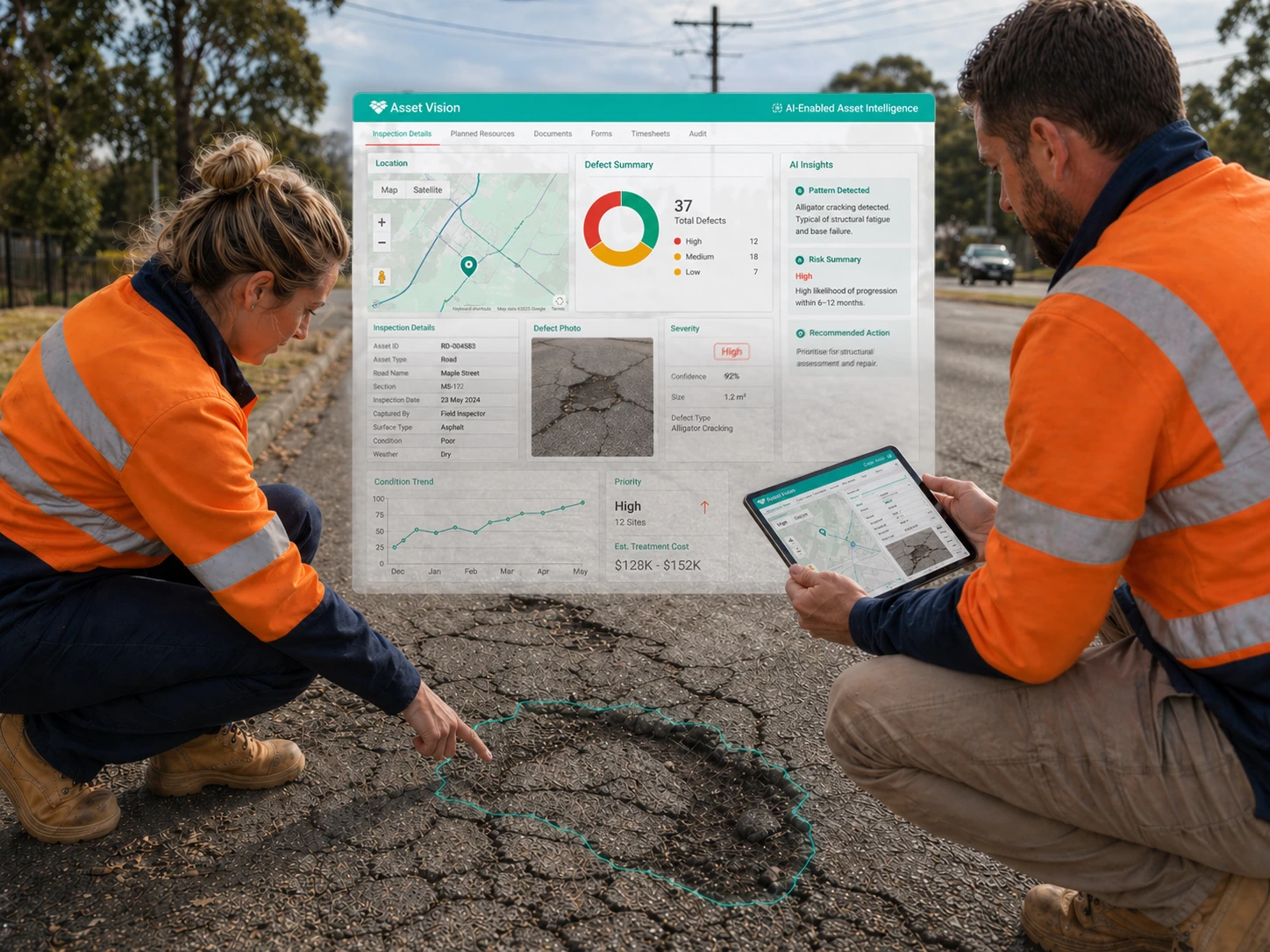
Moving from asset data to asset intelligence
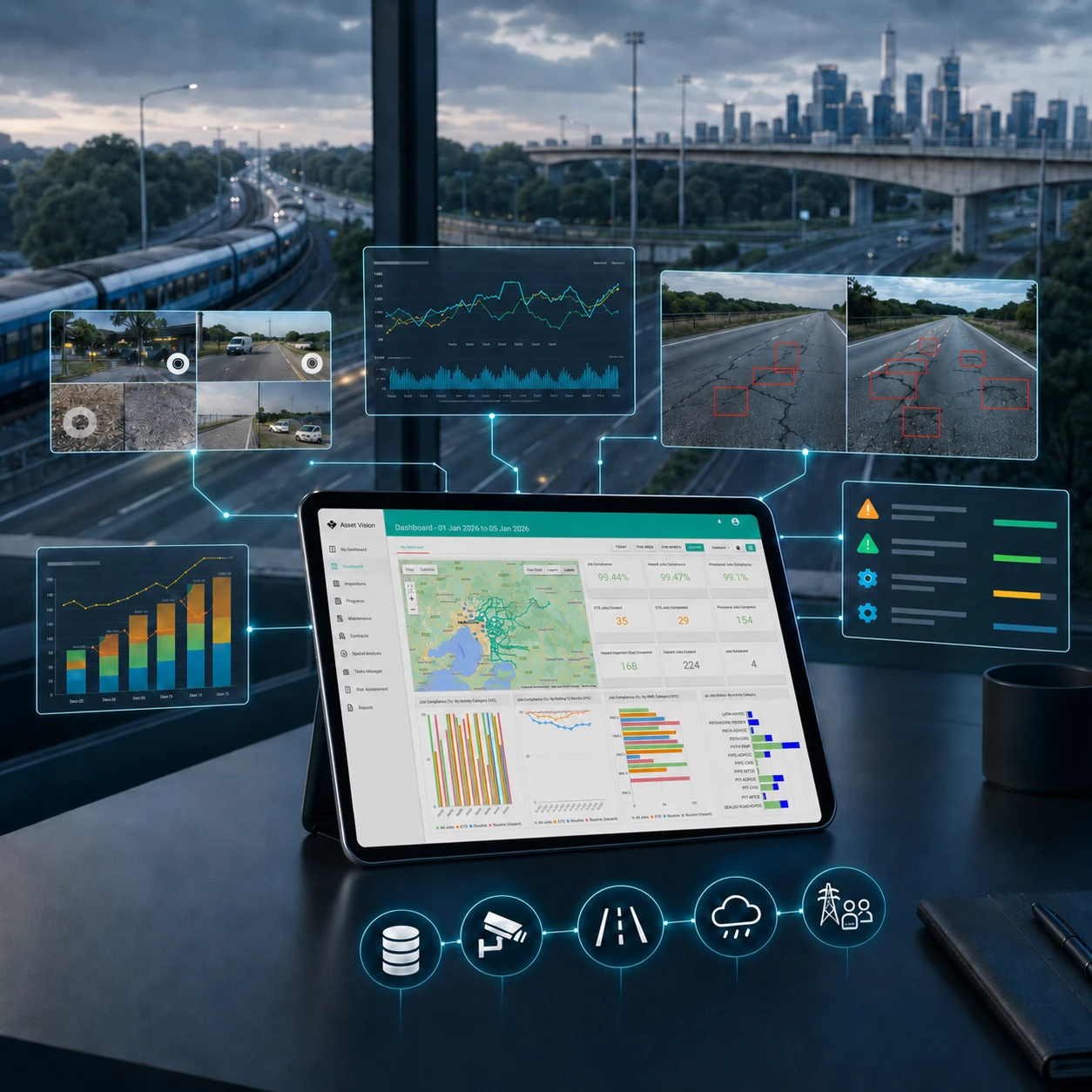
The answer is not simply to collect more data. Leading infrastructure organisations are focusing on making the information they already capture more connected, consistent and useful.
Asset Vision AutoPilot supports this shift by combining road inspection imagery, ride quality insights and AI-assisted defect detection to enable faster, evidence-based review.
This is the shift from asset data to asset intelligence. Asset intelligence brings together information such as:
- Asset location, classification and ownership
- Inspection results and supporting images
- Defects, risks and maintenance priorities
- Completed and outstanding work
- Condition and performance history
- Financial values and renewal requirements
- Long-term capital and lifecycle planning
When this information is connected, organisations can move beyond asking what might be happening across their network. They can see what is happening, understand why it matters and decide what should happen next.
Connecting the field with the decisions that follow
Better asset management depends on connecting what is observed in the field with what is understood in the office.
An inspection should not end when information is submitted. The evidence captured should contribute to maintenance prioritisation, risk management, budgeting, renewal planning and broader organisational reporting. When that connection exists, teams can identify issues earlier, monitor recurring problems and make decisions using evidence rather than assumptions.
It also improves confidence across the organisation. Field teams know that the information they collect is being used. Asset managers gain a clearer view of network condition and performance. Finance teams can work from more reliable asset information. Executives and elected representatives can understand why investment is being recommended.
Funding conversations become clearer, more transparent and more defensible.

Creating greater value from existing resources

Organisations that improve asset visibility can gain more than incremental efficiency. They can:
- Direct inspections towards areas of greater risk
- Identify defects and deterioration earlier
- Reduce duplicated data collection and administration
- Prioritise maintenance using consistent evidence
- Build stronger capital and renewal programs
- Support more credible funding submissions
- Reduce long-term cost and operational risk
Importantly, they do not need to wait for a major funding increase before beginning this shift. Many of the foundations are already present within their organisation. The opportunity lies in connecting the systems, people and information more effectively.
Building a connected view with Asset Vision
Turning this principle into practice requires more than another reporting tool. It requires a connected environment that links field evidence with operational and strategic decisions.
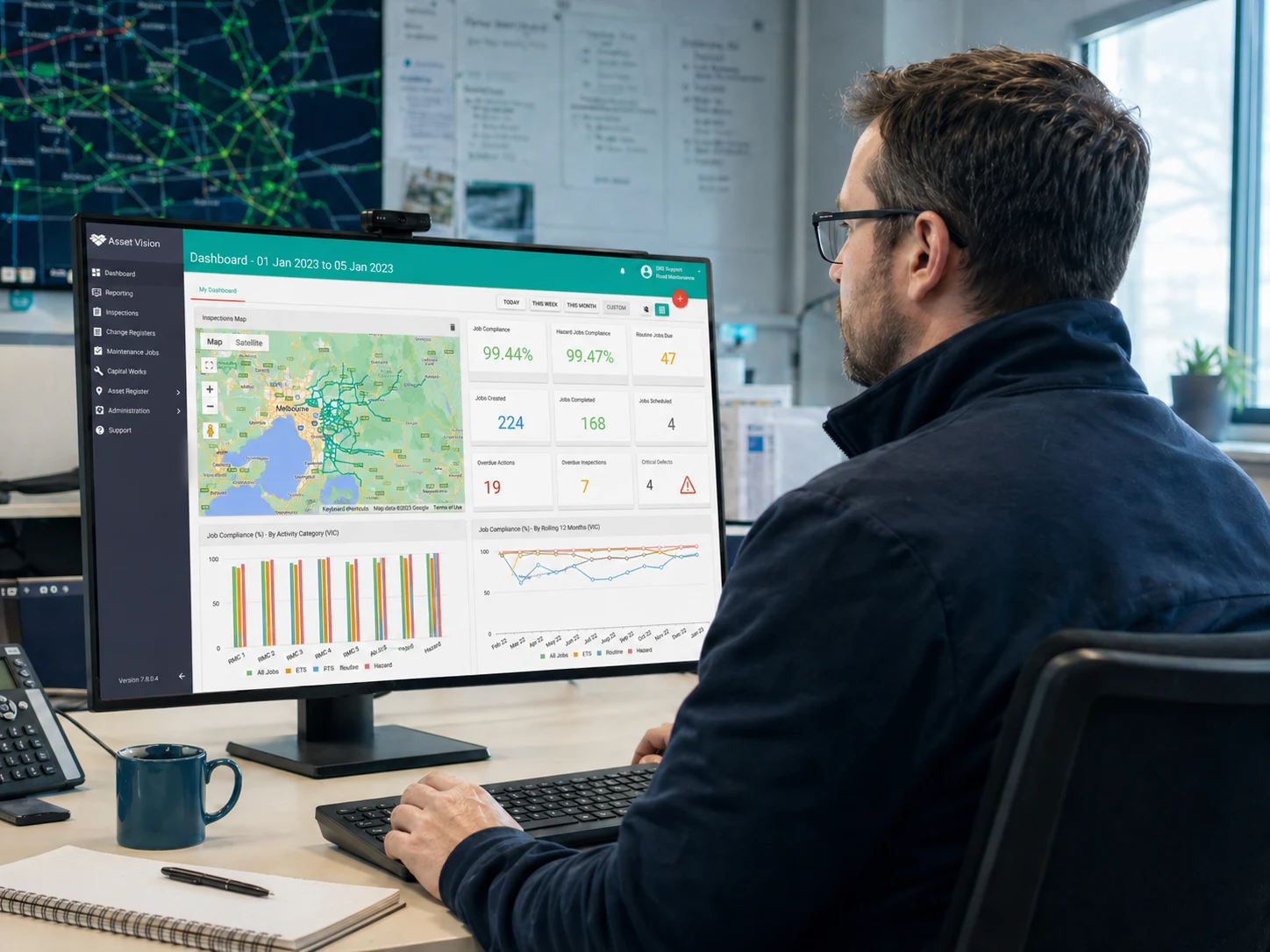
Asset Vision helps infrastructure organisations bring asset registers, GIS information, inspections, images, defects, maintenance activity and lifecycle planning into one connected environment.
Field teams can capture reliable information as part of their everyday work, while office-based teams gain clearer visibility across assets, locations, condition and outstanding activity.
This creates a stronger connection between field evidence, operational decisions and long-term planning.
Rather than adding another disconnected source of information, Asset Vision helps organisations make better use of the asset data they already hold and continue to capture.
Australia’s next infrastructure advantage

Australia faces more than an infrastructure funding challenge.
It also faces an infrastructure visibility challenge. The organisations that respond will be better placed to understand their networks, direct resources where they matter most and build stronger cases for future investment.
Australia’s next infrastructure advantage will belong to the organisations that can turn what they know into what they do next.
Frequently asked questions
What is asset intelligence?
Asset intelligence is the practical insight created when asset registers, inspections, condition information, defects, maintenance history, risk and planning data are connected. It helps organisations understand what is happening across their network and make more confident decisions.
How can better visibility support infrastructure funding decisions?
Reliable asset information allows organisations to demonstrate condition, risk, maintenance requirements and renewal priorities more clearly. This creates a stronger evidence base for budgets, capital programs, grants and long-term investment decisions.
Which organisations can benefit from asset intelligence?
Councils, transport authorities, utilities, ports, contractors and other asset-intensive organisations can benefit from connecting field evidence, operational activity and long-term planning.