

AI in council asset management: moving from hype to practical outcomes
A recent Council Magazine article highlighted how AI is already reshaping the way councils plan, deliver and maintain services, while also raising important questions around data readiness, accuracy, governance and human oversight.
For local government asset management teams, the next question is practical: how do councils turn AI awareness into better field evidence, better workflows and better decisions?
AI is quickly becoming part of the council conversation. Councils are exploring how it can support service delivery, reporting, planning, inspections, infrastructure maintenance and long-term asset planning.
But the real opportunity is not simply to “use AI”. It is to apply it to practical problems councils already face.
Where are teams losing time?
Where is field evidence inconsistent?
Where are decisions being made with incomplete or outdated information?
Where could better asset intelligence support safer, faster and more confident decisions?
These are the questions that matter.
AI needs the right asset data foundation
AI is only useful when it is connected to reliable data and real workflows.
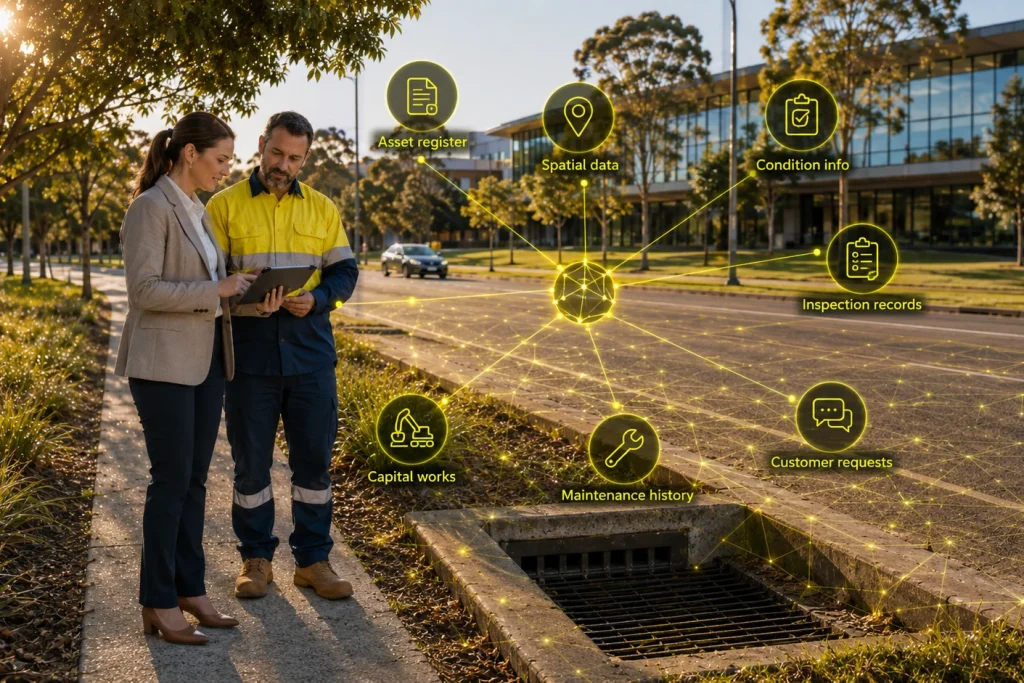
For councils, that means asset registers, spatial data, condition information, inspection records, customer requests, maintenance history and capital works planning all need to work together.
If this information is fragmented or difficult to trust, AI will struggle to deliver value. If it is connected and maintained, AI can help teams identify patterns, review evidence, support inspections and prioritise action.
This is especially important in council asset management software, where teams are managing large, diverse and ageing asset networks with limited resources.
Field-based AI needs real-world context
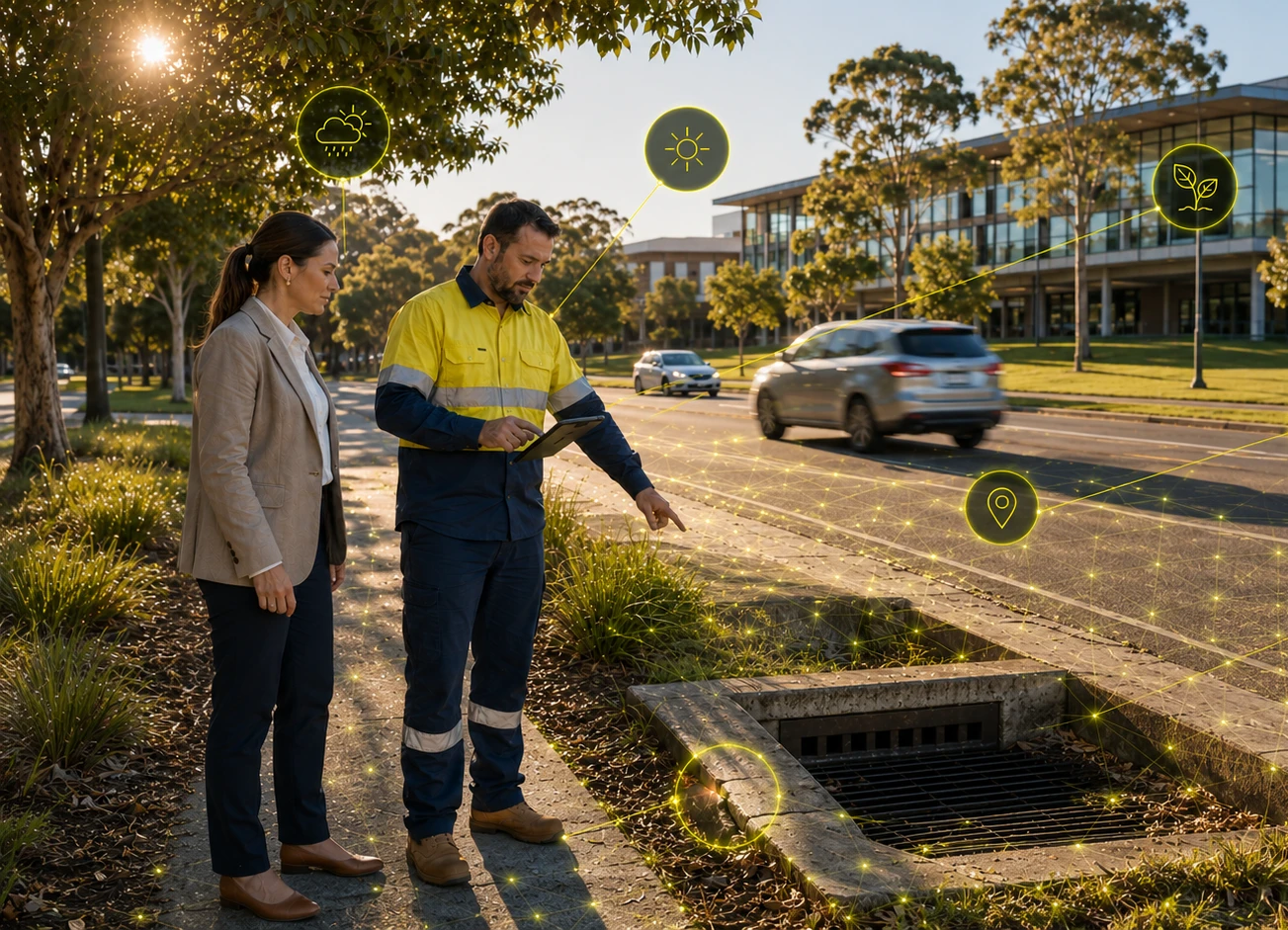
Council assets do not exist in clean digital environments.
Roads, footpaths, drainage, open spaces and facilities are affected by weather, lighting, vegetation, traffic, location accuracy and changing field conditions.
That is why AI in asset management needs more than a model. It needs context, workflow design and human review.
AI can help detect issues, classify defects and surface risks, but council teams still need to validate the information and make accountable decisions.
The goal is not to replace local knowledge. It is to support the people who understand the network, the service standards and the community outcomes behind each decision.
What practical AI looks like for councils
For councils, practical AI does not need to start with large transformation projects. It can start with the work already happening across the network every day.
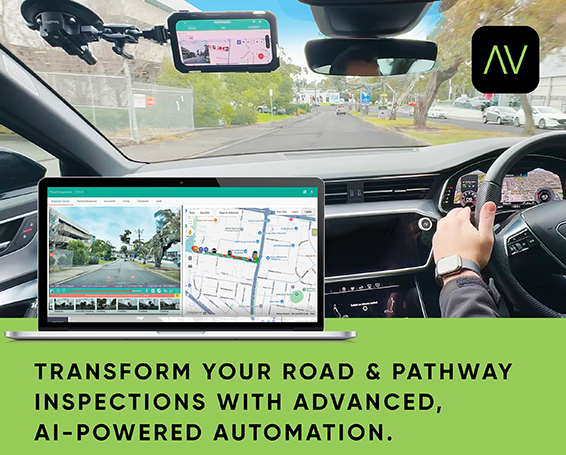
At Asset Vision, we see this in areas such as road imagery, defect capture, inspections, customer requests, maintenance planning and renewal prioritisation.
These are practical areas where better field evidence and connected asset data can help teams identify issues earlier, understand network condition more clearly and make more confident decisions.
Tools such as Asset Vision AutoPilot and Asset Vision CoPilot show how this can work in practice, by helping teams capture network evidence, identify potential defects and connect field information back into asset management workflows.
The value is not in AI acting alone. It is in helping council teams turn field evidence into action.
Start with practical council use cases

Councils do not need to start with complex AI projects.
The best starting point is often the work already happening every day:
- reviewing road imagery
- capturing defects
- supporting inspections
- linking customer requests to assets and works
- identifying maintenance trends
- improving renewal and capital planning decisions
These are high-value areas where AI can support existing teams without replacing their judgement.
The more practical the use case, the easier it becomes to measure value, build confidence and create trust in the outputs.
Connected workflows make AI more useful
AI becomes more valuable when it is connected to the systems, data and people involved in asset management decisions.
That means field evidence should not sit separately from asset registers, GIS, works management, customer requests, reporting and financial planning.
When information is connected, councils can move from isolated observations to better decisions about risk, service levels, maintenance and renewals.
This is where connected asset data becomes important. AI can help surface insights, but those insights need to flow into the workflows where decisions are made.

The opportunity for local government asset management

AI will continue to evolve, but the core challenge for councils remains the same: managing community assets, service levels, risk and cost with limited resources.
For council asset management, AI should not be treated as a standalone solution.
Its value comes when it is connected to trusted data, field evidence, clear processes and the people responsible for making decisions.
The councils that benefit most will not simply be those that adopt AI first. They will be the ones that apply it carefully to real problems, with the right data and governance in place.
That is where AI can move from hype to practical outcomes.
Not sure where to start? Download the Council Asset Management Readiness Checklist to assess your current asset data, GIS visibility, field inspections, works management, reporting, governance and readiness for future AI-enabled outcomes.
Frequently asked questions
What is AI in council asset management?
AI in council asset management refers to the use of artificial intelligence to help local government teams capture, review, connect and interpret asset information. This can include road imagery, defect detection, inspections, customer requests, maintenance trends, condition data and renewal planning.
How can AI help councils manage infrastructure assets?
AI can help councils identify potential defects, review field evidence, highlight patterns, support inspections and improve the consistency of asset information. Its value comes from helping teams make faster, clearer and more informed decisions about roads, footpaths, drainage, open spaces, facilities and other community assets.
Does AI replace council asset management teams?
No. AI should support council teams, not replace them. Human review, local knowledge and accountable decision-making remain essential, especially when asset decisions affect safety, service levels, budgets and community outcomes.
Why does asset data quality matter for AI?
AI relies on the information it is connected to. If asset registers, spatial data, inspection records, customer requests and maintenance history are fragmented or unreliable, AI outputs will be harder to trust. Connected, well-maintained data gives AI a stronger foundation to support useful decisions.
What are practical AI use cases for councils?
Practical use cases include reviewing road imagery, capturing defects, supporting inspections, linking customer requests to assets and works, identifying maintenance trends, prioritising renewals and supporting capital works planning.
Where should councils start with AI in asset management?
Councils should start with practical, high-value problems they already understand. This might include improving field evidence, reducing manual review, connecting inspection data to works, or strengthening the quality of asset information used for maintenance and renewal decisions.